CSAPR is EPA's cap-and-trade response to the Clean Air Act's Good Neighbor Provision. We help power-sector generators surrender allowances against their actual annual emissions — and we trade the curves across vintages, groups, and seasons.
CSAPR addresses the long-standing problem of interstate transport: nitrogen oxides and sulfur dioxide emitted by power plants in one state contribute to ozone and fine-particle nonattainment in states downwind. The rule converts that physics into a financial obligation — and a trading market.
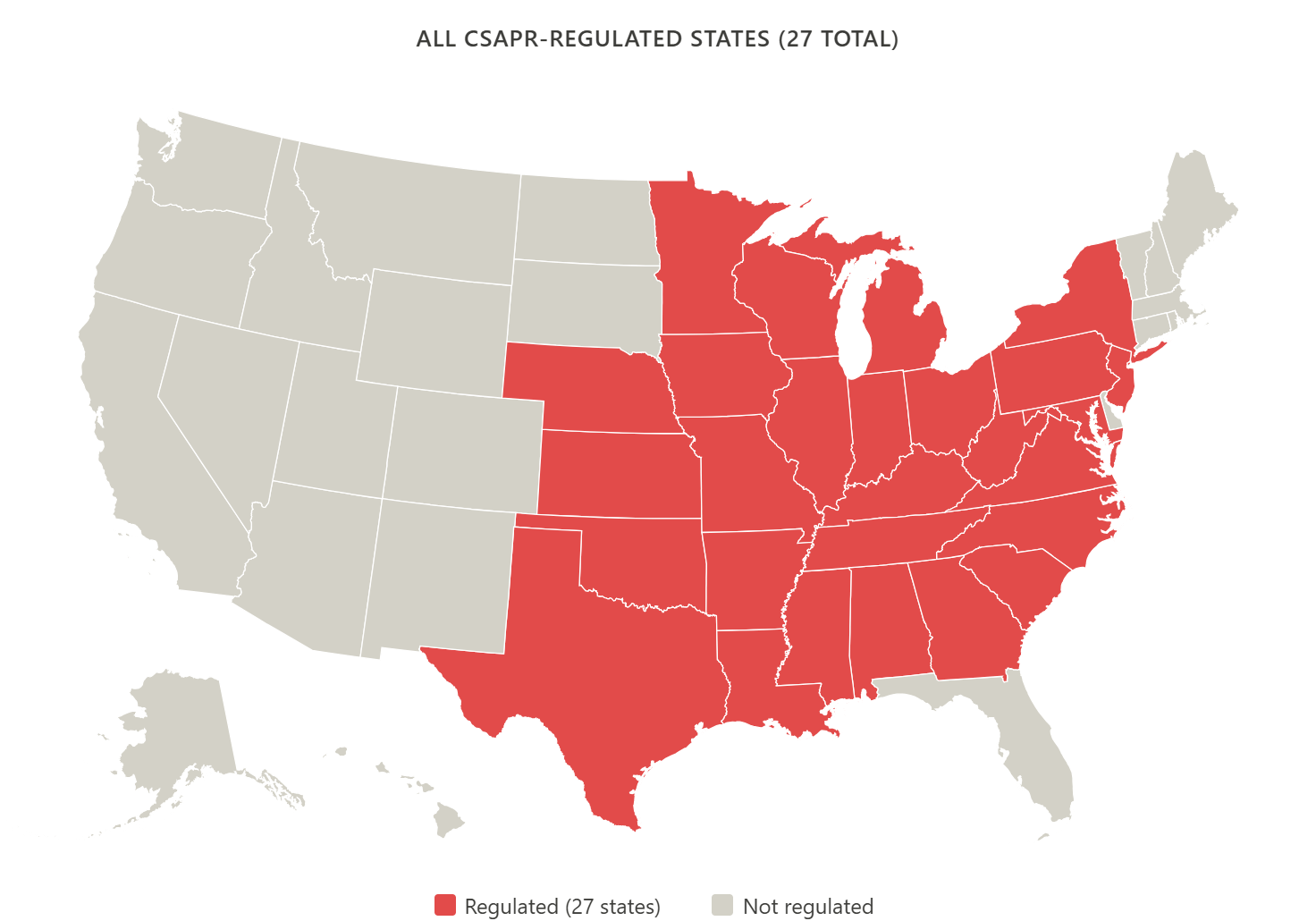
Finalized by the EPA in 2011 and substantially expanded by the Good Neighbor Plan in 2023, CSAPR caps NOx and SO₂ emissions from fossil-fueled electric generating units across a 23-state program footprint. Each ton emitted requires one allowance surrendered at the end of the compliance period.
Allowances are allocated annually by EPA and can be banked, borrowed in narrow circumstances, and freely traded between accountholders. The market is liquid, transparent, and settled through EPA's CAMD registry.
Where 1delta adds value is at the seams. Compliance and trading have historically lived in separate functions — the environmental team handles surrender, the trading desk handles hedging. We sit across both, which means we can read the curve, time the surrender, and capture optionality that a single-function desk leaves on the table.
Our experience spans every CSAPR vintage and every program group — we have traded ozone season NOx, annual NOx, SO₂ Group 1, and SO₂ Group 2, and we have built compliance positions for asset owners on both sides of the trade.

CSAPR is not one market — it is a family of related markets with distinct caps, footprints, and price drivers. We provide coverage and execution across every active pool.
Ozone season NOx allowances covering the original 2017-era footprint. Compliance window May 1 – September 30. Surrender against actual emissions of nitrogen oxides during the ozone season.
OZONE SEASON · GROUP 2 CSAPR Group 2 NOxExpanded ozone season NOx market following the 2017 update rule. Distinct cap, distinct allowance instrument, but same May–September compliance window. Liquidity has grown materially since the Good Neighbor Plan.
OZONE SEASON · GROUP 2 EXPANDED CSAPR Group 2 Expanded NOxCreated under EPA's 2021 Revised CSAPR Update and significantly tightened under the 2023 Good Neighbor Plan. The most actively traded ozone season pool today, with a steadily declining cap through the late 2020s.
Annual Annual NOxYear-round NOx allowance program covering fine-particle pollution transport across 22 states. Distinct from the seasonal Group 1 and Group 2 programs; surrender obligations settle once per calendar year.
Annual Annual SO₂ Group 1Year-round sulfur dioxide allowance program covering 16 states whose annual SO₂ emissions contribute most significantly to downwind fine-particle nonattainment. Surrender obligations settle once per calendar year.
Annual Annual SO₂ Group 2Secondary SO₂ pool covering six states whose contribution patterns sit outside the Group 1 footprint. Smaller cap and tighter footprint than Group 1; allowance instruments are distinct and cannot be used interchangeably.
No. CSAPR allowances and Acid Rain Program (ARP) SO₂ allowances are separate instruments with distinct compliance uses. ARP is a national SO₂ program with a fixed historical cap; CSAPR overlays a tighter regional cap addressing interstate transport. Generators in covered states must hold both — but they cannot be substituted for each other.
The GNP tightened the Group 3 ozone season NOx program and expanded its footprint, layered in declining annual caps through 2029, and for the first time extended CSAPR-style obligations to certain non-power industrial sources. It has been a primary driver of recent market activity and price discovery.
Yes, but EPA periodically applies conversion ratios when promulgating new program groups, which can dilute the value of banked positions. Bank strategy is therefore a central consideration in CSAPR portfolio management — and one of the places we add the most value.
Fossil-fueled electric generating units 25 MW or larger in covered states. Under the Good Neighbor Plan, certain non-power industrial sources (cement, glass, iron and steel, pulp and paper, basic chemicals, refineries) in covered states also have NOx obligations.
Whether you're a generator approaching a surrender deadline or a trader looking to take or unwind a position across program groups — we can help.